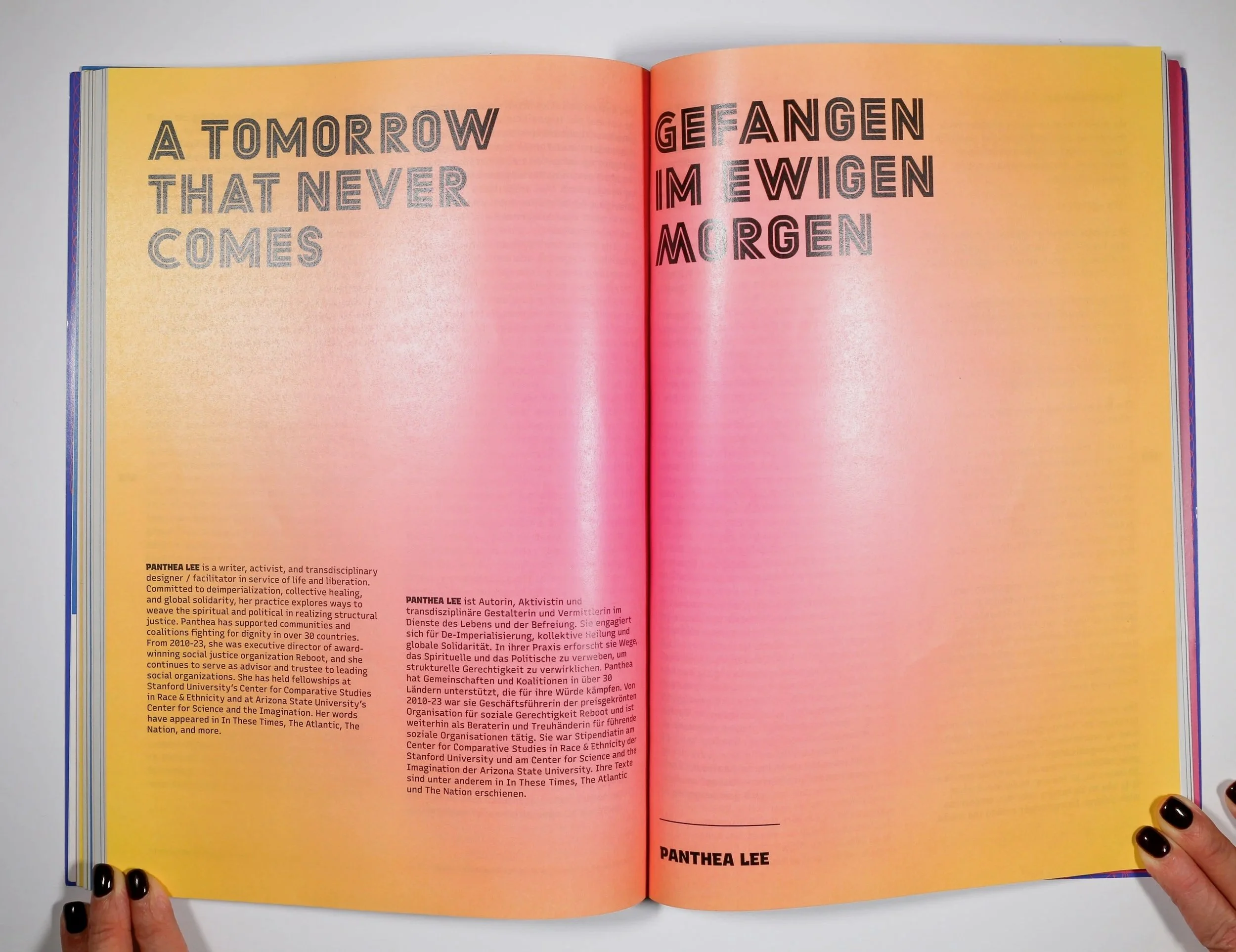
a tomorrow that never comes
永遠不會到來的明天
2023-
writing, social practice
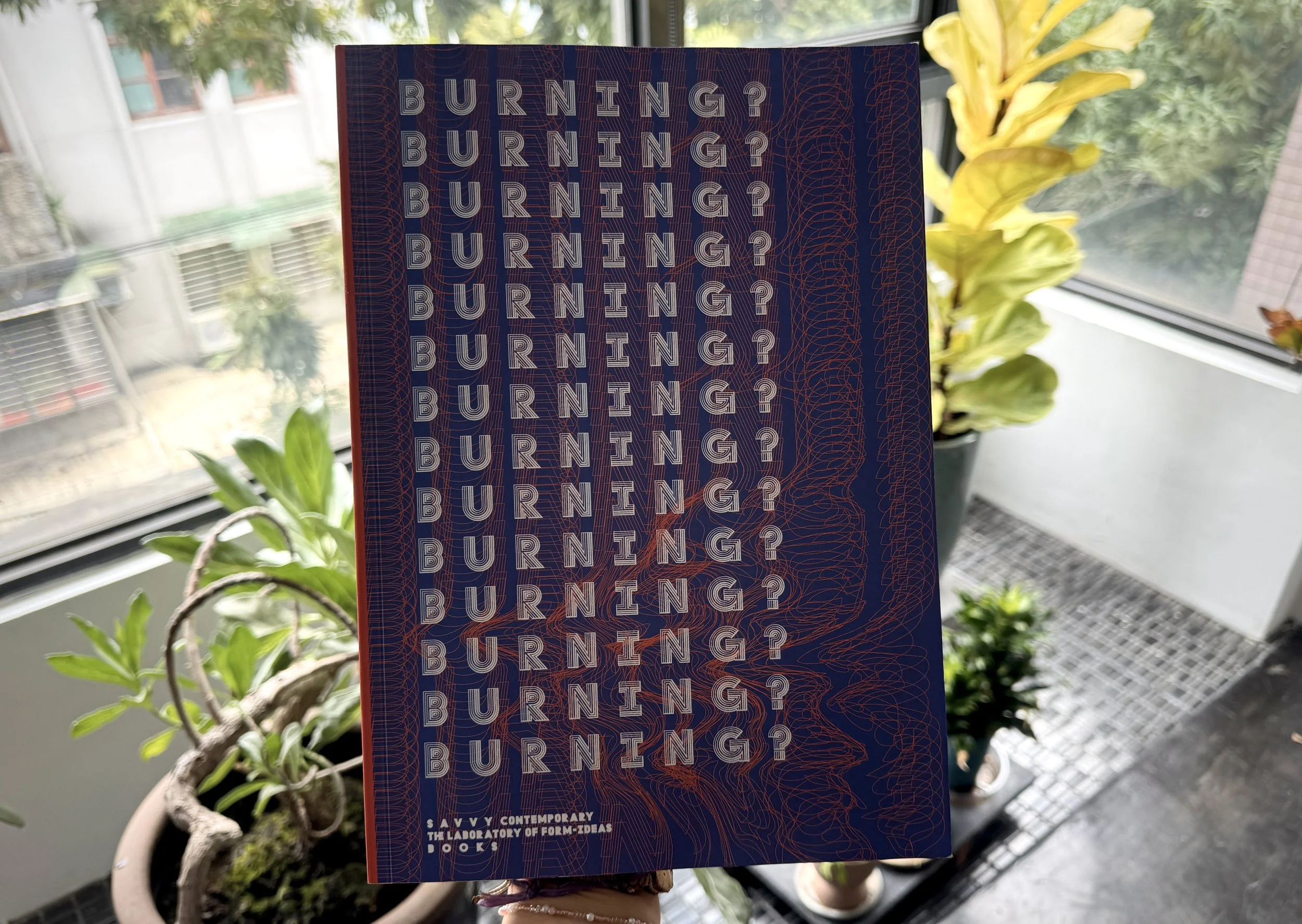
Essay featured in Burning? published by SAVVY Contemporary, edited by Mokia Dinnyuy Manjoh and Meghna Singh, with the title drawing from a conversation with Timothy Kiprono, and a work in development.
2023-
寫作、社會實踐
收錄於 SAVVY Contemporary 出版之《Burning?》,由 Mokia Dinnyuy Manjoh 與 Meghna Singh 編輯,標題來自我與 Timothy Kiprono 的一段對話,並延伸為一件持續發展中的作品。
We met in Iten, in Kenya’s Rift Valley, where the sky is a brilliant blue yawning in all directions and everything feels possible. I had just arrived for a project; Timothy had already been working for justice and accountability here for years. He was an exuberant activist, texting me at all hours with ideas for his community and commentary on the in’s and out’s of local legislative processes. In the Rift Valley, it was impossible to imagine civil society organizing without him. His voice was clear, commanding, optimistic—he knew what his people deserved, and how, through the channels available to them, to try to get it.
Years later, as I was preparing to leave the sector, we spoke again. He sounded different. Tired. He told me he was stepping back. When I said I was leaving entirely, he said he probably would as well.
He was renovating an apartment to rent out on Airbnb. Something tangible, something that would not take so much from him. After more than a decade in this work, the last effort we worked on together had broken something in him.
“The stories we were told are not real. We believed them, but we’ve been disappointed in so many ways. [These initiatives] run on hope—they tell us that tomorrow is coming. So we wait. But tomorrow doesn’t come, so they say it’s the next tomorrow, but that tomorrow doesn’t come either; then they say it’s the next. This is the worst kind of prison: To forever be waiting for a tomorrow that never comes.”
By then, I had spent over a decade inside the “development” and “democracy” sectors. I had entered with the belief that it could be changed from within. Over time, I came to see how its timelines stretch endlessly forward: how failure is absorbed and labeled “lessons learned”. Who is made to wait? Who gets to move on? For some, this is their lives; for others, simply a career.
I am often struck by how much mass mobilization is possible in response to overt violence, but how little energy is sustained in dismantling the systems that make such violence predictable—and that manage their aftermaths. Institutions like USAID, the World Bank, and the contractors around them are easy to dismiss. But they continue to set the terms of survival for billions, defining what counts as “enough” and “progress”, what can be demanded and how far those demands can go.
The conversation with Timothy stays with me. I think about it each time I rip off a page from my 黃曆.
我們在肯亞裂谷的 Iten 相識。那裡的天空湛藍,向四面八方敞開,一切都彷彿充滿可能。我剛為了一個計畫抵達;Timothy 早已在這裡投入正義與問責的工作多年。他是一位充滿能量的行動者,無論白天或深夜,都會傳訊給我,分享他對社區的想法,以及對地方立法運作細節的觀察。在裂谷地區,很難想像公民社會的組織工作可以沒有他。他的聲音清晰、有力,也始終帶著一種樂觀——他知道他的人民應得的是什麼,也知道如何在既有的制度之中,試圖為他們爭取。
多年後,當我正準備離開這個領域時,我們再次通話。他聽起來不一樣了。疲憊。他說他正在慢慢抽離這份工作。當我告訴他我要徹底離開時,他說他大概也會。
他開始整修一間公寓,打算放到 Airbnb 上出租。一件具體的事,一件不會從他身上奪走太多的事。在這份工作裡走過十多年後,我們最後一次共同投入的行動,讓他心中某個曾經深信不疑的東西崩裂了。
「我們被告知的那些故事都不是真的。我們曾經相信,但一次又一次失望。[這些倡議]是靠希望在運作——它們告訴我們,明天就要來了。於是我們等待。但明天沒有來,他們就說是下一個明天,但那個明天也沒有來;然後他們又說是下一個。這是最糟的一種牢籠:永遠被困在等待一個不會到來的明天。」
那時,我已在「發展」與「民主」這些領域中走過十多年。我曾相信,可以從內部改變它。隨著時間過去,我開始看見,它的時間軸如何不斷向前延展:失敗被吸納,被重新命名為「經驗教訓」。誰被迫等待?誰得以離開?對某些人而言,這是一生;對另一些人而言,不過是一段職涯。
我常被一種落差所觸動:面對顯而易見的暴力,人們能迅速動員,但對於那些讓這些暴力變得可預期、並在事後持續運作的體系,卻鮮少有同樣持續的拆解。像 USAID、世界銀行,以及圍繞其運作的承包體系,很容易被一筆帶過。但它們依然在界定著人們生存的條件——什麼被視為「足夠」、什麼被稱為「進步」,可以提出什麼要求,以及這些要求最終會走到哪裡。
與 Timothy 的那段對話一直留在我心中。每當我撕下一頁黃曆時,便會想起它。