interrupting what survival demanded
打斷生存的反應
2024-
facilitation
Held across one-on-one and group workshops, and as part of larger gatherings, with partners including Healing Justice London, The Laundromat Project, Mekong Cultural Hub, Urgent Action Fund, Democracy Fund, UNDP, and others, drawing on training and supervision from Nkem Ndefo and Arrowyn Ambrose.
2024-
引導
此工作以一對一與團體形式進行,亦作為大型聚會的一部分展開,合作夥伴包括 Healing Justice London、The Laundromat Project、Mekong Cultural Hub、Urgent Action Fund、Democracy Fund、UNDP 等,並承接 Nkem Ndefo 與 Arrowyn Ambrose 的訓練與督導。
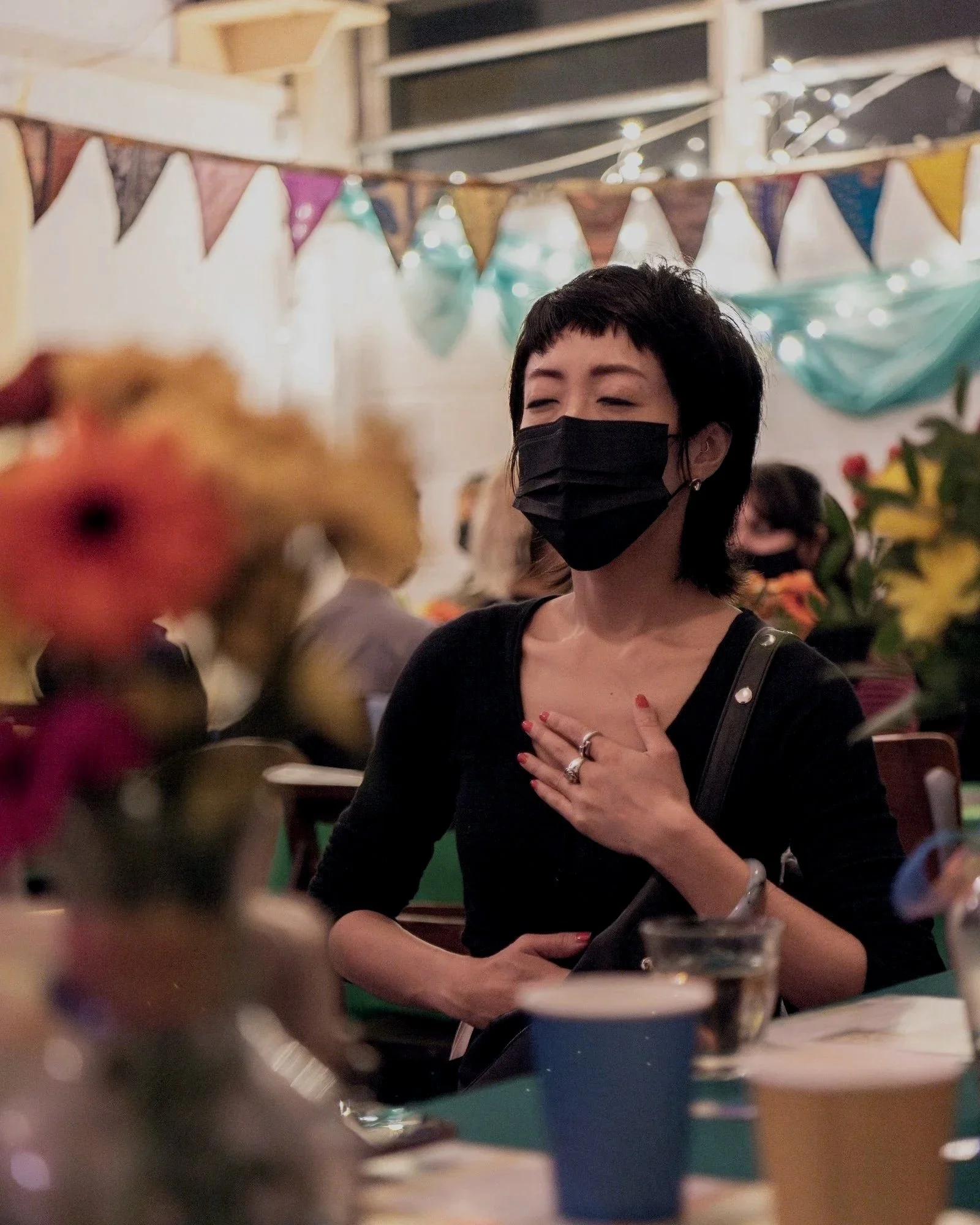
I used to enter high-stakes meetings with fire in my belly, carrying what communities had entrusted to me. And then, as negotiations began, something else would take over: I nodded along as officials insisted that too little was “the best we could do”; I felt the pit in my stomach spread across my body until it swallowed me whole. Sometimes, the tears came—grief, yes, but mostly the humiliation of how quickly I folded.
Afterwards, I turned the shame inward. I pushed myself to develop sharper arguments and stronger delivery. It took a long time to see that this wasn’t the issue; it was the repertoire my body reached for under pressure.
And I wasn’t alone. Over years of stewarding movement gatherings and institutional negotiations, I began to notice how certain patterns repeat across bodies like mine—patterns shaped by how our communities learned to survive.
In many spaces, I saw people softening themselves to stay safe: smiling to diffuse tension, narrowing what they said before it could be dismissed. In others, I saw collapse: energy draining out of the body at the very moment it was needed. Or the opposite: fire surging forward too quickly, before there was ground to hold it. Over time, I came to understand these as intelligent responses that had once kept our ancestors alive. Yet when they move through our work unchecked, they begin to constrain what becomes possible beyond survival.
This work grows out of that recognition.
Across the spaces I hold, I work primarily with women and non-binary folks, and with activists of the global majority. We begin with what is already happening in the body. We sit. We notice. We track what shifts when pressure rises: when conflict sharpens, when “power” enters the room, when the people and places we love are at stake.
From there, we begin to practice interruption. We expand what is available: breath, attention, and movement. This work is not about “self care” or “wellness” or correcting the body, but about restoring agency and choice. So that a moment that would’ve closed begins to open, even slightly, and a different response becomes possible.
Because if our bodies keep reenacting collapse, appeasement, or disconnection under threat, our politics and our organizing will reflect the same patterns.
This work does not remove the conditions that make some bodies more structurally precarious and fragile. But it changes how we meet these conditions so that we can begin to transform them.
我曾帶著滿腔火焰走進高風險的會議,承載著社群所託付於我的一切。但隨著談判展開,另一種東西開始接管。我點頭附和,聽著官員一再強調,眼前這樣的結果已經是「我們能做到的最好」。我感覺胃裡的沉重一路蔓延到全身,直到將我整個吞沒。有時眼淚會流下來——那是悲傷,但更多時候,是對自己如此迅速退讓的羞愧。
會後,我把這些羞愧往內吞。我逼自己發展出更銳利的論點、更有力的表達。很長一段時間後,我才看清問題並不在這裡,而是在壓力之下,我的身體會動用的那一套反應方式。
而我並不孤單。多年來,在帶領行動者的聚會與制度交涉的過程中,我開始注意到某些模式如何一再出現在像我這樣的身體之中——這些模式,來自我們的社群在過往如何學會生存。
在許多空間裡,我看見人們為了安全而讓自己變得柔軟:用微笑化解緊張,在話語尚未被否定之前就先行收斂。在另一些時候,我看見崩塌——正當某種力量被需要時,能量卻從身體裡流失。又或者是另一種情況:能量過早地湧出,在尚未有承接之前就已經失控。隨著時間過去,我開始理解,這些都是曾經讓我們的祖先得以活下來的聰明反應。然而,當它們在當下的工作中不被覺察地持續運作時,便會開始限制我們超越「生存」之後,還能成為什麼樣子。
這項工作,正是從這樣的理解中長出來的。
在我所帶領的空間裡,我主要與女性、非二元性別者,以及來自全球多數的行動者一起工作。我們從身體已經正在發生的事情開始。我們坐下來。我們感受。我們觀察壓力升起時身體如何變化——當衝突變得尖銳,當權力進入房間,當我們所愛的人與地方正面臨威脅。
從這裡出發,我們開始練習打斷。不是用力對抗,而是擴展當下可以運用的資源:呼吸、注意力、動作。這項工作並不是關於「自我照顧」或「健康」,也不是在修正身體,而是讓我們重新取回行動與選擇的能力。讓那些原本會關閉的時刻,哪怕只是稍微地,開始鬆動;讓不同的回應,有機會出現。
因為,如果我們的身體在面對威脅時,仍不斷重演崩塌、討好或斷裂,我們的政治與組織方式,也會複製同樣的模式。這項工作並不會消除那些讓某些身體處境更為脆弱與不穩定的結構條件。但它改變了我們如何與這些條件相遇,讓轉變開始變得可能。