an altar for our ashes
灰燼之壇
2025-
social practice
Activated during the opening week of the 36th Bienal de São Paulo, in collaboration with SAVVY Contemporary and hosted by Casa do Povo, and the Ecosystems of Care Gathering in Vientiane, Laos, hosted by Urgent Action Fund and Mekong Cultural Hub. The altar continues to travel.
2025-
社會實踐
首度於第36屆聖保羅雙年展開幕週期間啟動,與 SAVVY Contemporary 合作,並由 Casa do Povo 主辦;其後於寮國永珍舉行的「Ecosystems of Care」聚會中延續,由 Urgent Action Fund 與 Mekong Cultural Hub 共同主辦。此壇持續移動之中。
In 2023, I began to pull back from organizing and advocacy work as its limits had become hard to ignore. The efforts I was part of had grown louder and bolder, but the foundations beneath them felt increasingly brittle. For every hard-won step forward, the world slipped ten steps back. Coalitions strained, relationships frayed, and comrades were spent.
We were fluent in material analysis—in mapping power, identifying leverage, negotiating concessions—but our spiritual ground felt thin. We were less able to stay with one another, or with what could not be resolved.
A year later, I returned to Taiwan after 35 years away. In my daily life, I noticed altars everywhere: tucked into alleyways, nestled behind waterfalls, carved into cliffs, glowing at the edge of night markets. Each time, I found myself stopping—to pay my respects, to ask, and to listen.
In a time of personal and collective rupture, I had many questions. I threw moon blocks and drew divination sticks, and these practices offered me a clarity I had not found elsewhere. And I began to wonder: what might these rituals, which could hold me in times of heartache and uncertainty, offer us collectively?
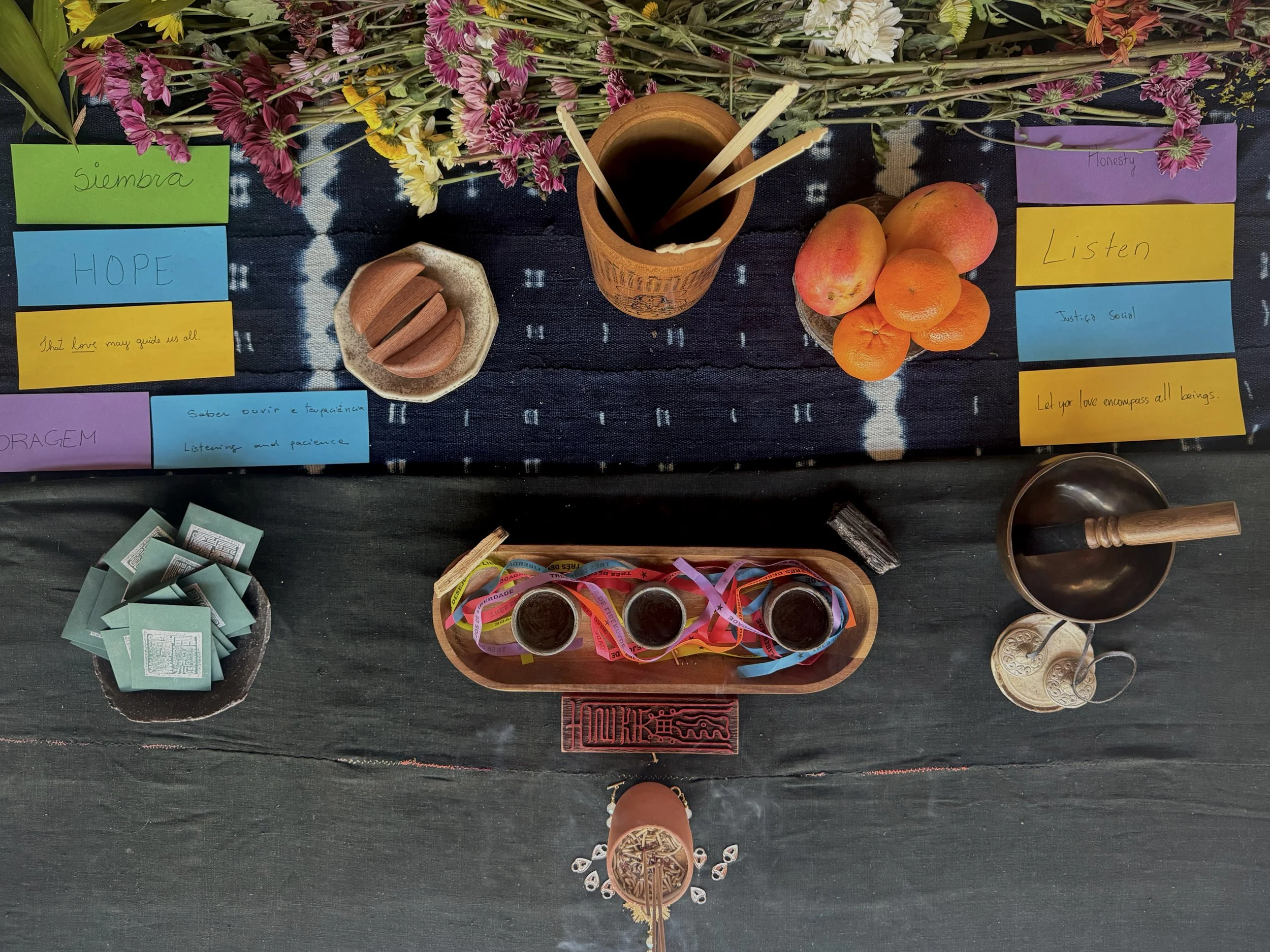
The altar began as a simple structure: portable, open, unfinished. Rooted in Taoist cosmology, it changes with each place it travels to, shaped by those it meets. It gathers what people bring: photographs, talismans, poems, and questions that have no easy place to rest.
Some light incense. Some pray. Some ask questions. Some draw divination sticks. Some leave an offering. Some receive a blessing.
Threads are tied. Smoke carries what cannot be held. Ash gathers: what we have burned through, what remains.
Over time, the altar is moving toward spaces of social and political reckoning. I stepped back because so much of what people were carrying—grief, rage, paralysis—was entering the work in ways it did not know how to hold. Without a way to stay with what cannot be resolved, it becomes difficult to sustain movement toward liberation. The altar does not try to resolve this. But it shifts how we gather and metabolize what we carry—and, in doing so, what else becomes possible.
2023年,我開始從組織與倡議工作中稍稍退開,因為其中的侷限已變得難以忽視。當時我所參與的行動愈發高聲、也愈發激進,但其下的基礎卻愈加脆弱。每一個艱難爭取來的前進,彷彿都被世界向後拉扯十步。聯盟開始緊繃,關係逐漸磨損,夥伴們也早已筋疲力盡。
我們擅長物質性的分析——描繪權力、尋找槓桿、協商讓步——但在精神層面上,腳下的地卻顯得單薄。我們愈來愈難與彼此同在,也難以與那些無法被解決的事物共處。
一年後,我在離開35年後回到台灣。在日常生活中,我開始在各處看見神壇——藏在巷弄之中,隱於瀑布之後,鑿刻於山崖之上,在夜市邊緣靜靜發光。每一次經過,我都會停下腳步——致意、提問、傾聽。
在一個個人與集體同時破裂的時刻,我心中充滿了問題。我擲筊、抽籤。這些實踐帶來了一種我在其他地方未曾找到的清明。於是我開始想:這些在不確定與心碎之中承接我的儀式,是否也能為我們所共享?
這座壇起初只是個簡單的構造:可移動、開放、尚未完成。它根植於道教宇宙觀,並在每一次移動中隨著相遇的人而改變。它承接人們帶來的一切:照片、護符、詩句,以及那些無處安放的提問。
有人點香,有人祈禱,有人提問,有人抽籤。有人留下供物,有人帶走一份祝福。
紅線被繫上。煙霧帶走那些無法承載之物。灰燼聚集——那些我們已燃盡的,以及仍然留下的。
隨著時間推進,這座壇正移動至各種社會與政治交會、對峙的場域。我之所以退開,是因為人們所承載的——悲傷、憤怒、停滯——正以這些工作無法承接的方式湧入其中。當我們無法與那些無法被解決的事物共處時,便難以持續朝向解放前行。這座壇並不試圖解決這一切。但它改變了我們相聚的方式,也讓我們得以轉化彼此所承載之物——並在此之中,讓其他的可能開始浮現。